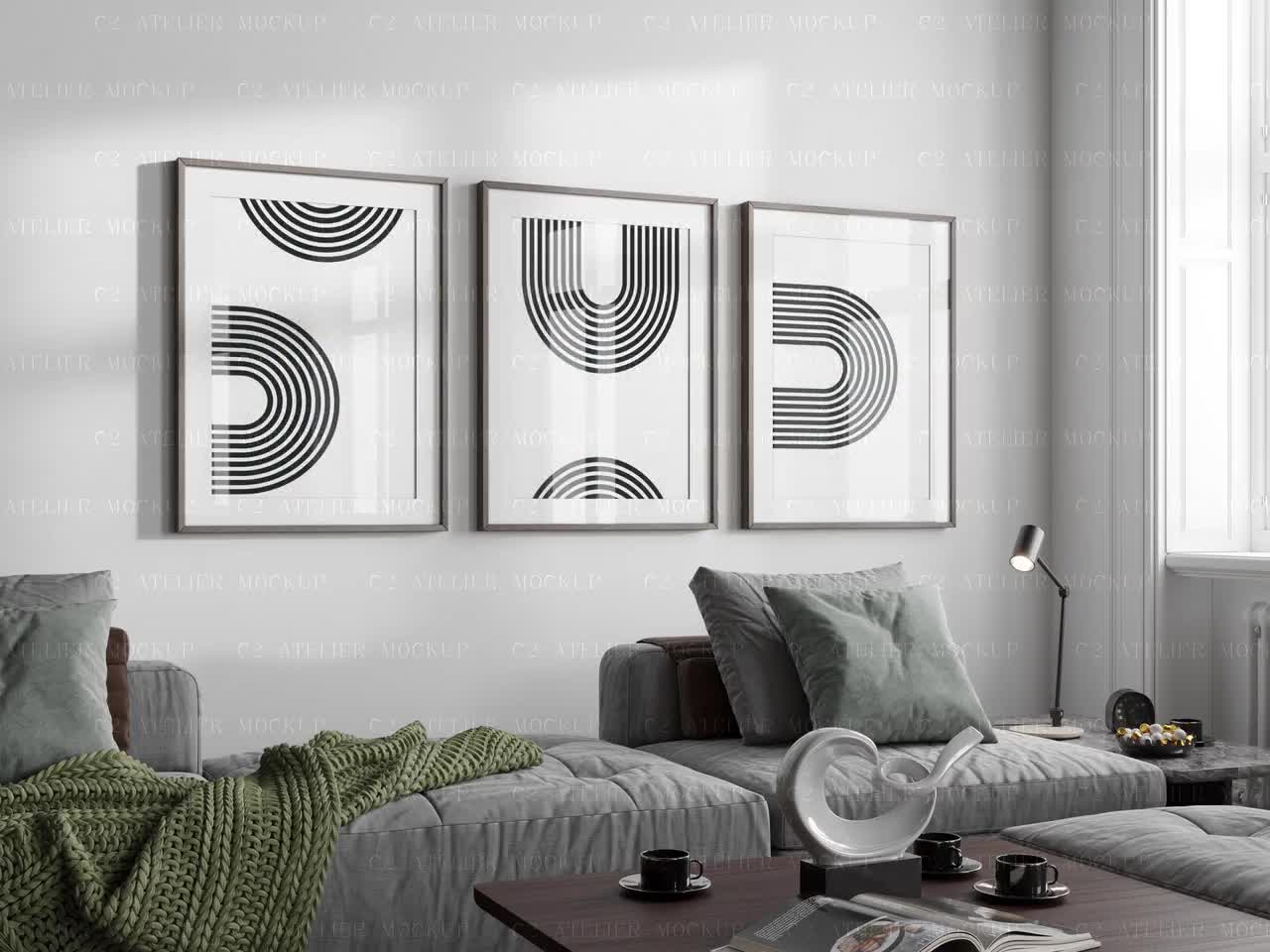
Why Etsy's Search Algorithm Rewards Listings With High-Quality Mockup Images
Every Etsy seller knows the drill. You spend hours researching keywords, stuffing your tags, writing a polished product description, and pricing competitively. Then you upload a flat, low-effort product image and wonder why your listing never climbs past page four.
Here's the thing nobody tells you clearly enough: Etsy's search algorithm is not just reading your text. It's watching how shoppers behave when they encounter your listing. And your mockup image is the first thing that triggers that behavior, or kills it.
This post is going to walk you through exactly why image quality has a measurable effect on where your listing ranks, what specific signals Etsy tracks, and how you can use better mockups to work with the algorithm instead of fighting it.
How Etsy's Search Algorithm Actually Works
Before we get into images specifically, it helps to understand what Etsy's algorithm is actually trying to do. Etsy calls its ranking system "search placement," and it's built around one core goal: show shoppers the listings most likely to result in a purchase.
To figure out which listings meet that goal, Etsy tracks a combination of relevance signals (your keywords, tags, categories, attributes) and quality signals (how shoppers interact with your listings). The second category is where image quality starts to matter enormously.
Relevance Signals vs. Quality Signals
Relevance signals tell the algorithm what your product is. They answer the question: does this listing match what the shopper searched for? Keywords in your title, tags, categories, and description all feed into this.
Quality signals tell the algorithm how good your listing is at converting interest into action. They answer the question: when shoppers see this listing, do they click on it, engage with it, and buy from it? These signals include your click-through rate, your conversion rate, and your overall shop history.
Here's the important part: relevance gets you in front of a shopper. Quality signals determine whether you stay there. Two listings targeting the exact same keywords will be ranked differently based on how their shoppers behave, and your image is the primary driver of that behavior.
Listing Quality Score: The Metric That Moves You Up
Etsy uses something informally known as a "listing quality score" to measure how well each of your listings performs. This score is updated over time based on real shopper interactions. A listing that consistently gets clicked, favorited, and purchased will earn a higher quality score and rank higher for relevant searches.
What does this have to do with your mockup image? Everything. When someone searches for "boho wall art print" and your listing appears in the results, the only thing they see before deciding whether to click is your thumbnail image, your price, and maybe a snippet of your title. Your mockup image is doing essentially all of the visual work in that split second.
A blurry, flat, or poorly composed image tells the shopper to keep scrolling. A crisp, styled, professionally framed mockup makes them stop and click. More clicks mean a better quality score. A better quality score means higher rankings. It compounds over time.
Takeaway: Understand that Etsy rewards listings that earn shopper engagement, not just listings that use the right keywords. Your image is the first engagement trigger, so it directly feeds the quality signals that influence your ranking.
Click-Through Rate: The Signal Most Sellers Underestimate
Click-through rate, or CTR, is the percentage of shoppers who see your listing in search results and actually click on it. It's one of the most direct signals the algorithm uses to evaluate how appealing your listing is relative to the competition.
Most Etsy sellers obsess over conversion rate, which measures purchases relative to visits. That matters too, but CTR comes first. You can't convert a visitor you never got. And the most powerful lever you have on your CTR is your first listing image.
The Thumbnail Competition
Picture the Etsy search results page for any popular category, say, digital art prints or nursery wall art. Every listing is represented by a thumbnail. Shoppers are scanning dozens of them at once, making instant visual judgments. The listings with warm, styled, realistic-looking mockup images consistently stand out against flat product images or screenshots of the art file itself.
Shopper psychology plays a big role here. When someone is shopping for wall art to hang in their living room, they aren't thinking about the art file. They're imagining how it will look on their wall. A mockup that shows the print framed and hanging in a beautifully lit room does the imaginative work for them. It creates an emotional connection before they've even clicked.
Listings that create that connection get more clicks. More clicks improve CTR. Better CTR improves listing quality score. Better listing quality score improves search ranking. The chain is direct.

How Often Etsy Updates Your CTR Signal
Etsy's algorithm doesn't lock you into your initial performance forever. It continuously recalculates quality signals based on recent shopper behavior. This means if you've had a low-performing listing with weak images and you upgrade those images today, you can start building a better CTR signal relatively quickly.
This is genuinely good news for sellers who haven't prioritized image quality before. It's not too late to improve. Updating your listing images can lead to a measurable improvement in clicks within weeks as Etsy gathers new data on how shoppers respond.
Takeaway: Treat your first listing image as your most important marketing asset on Etsy. Audit your shop's thumbnails and ask honestly: would you click on that among fifty competitors? If the answer is no, that's where to start.
Conversion Rate and How Images Influence It
Once a shopper clicks through to your listing, your images take on a second job: convincing them to buy. Conversion rate measures how often a visit turns into a purchase, and Etsy absolutely factors this into search placement.
High-quality mockup images play a major role in conversion for several interconnected reasons.
Reducing Buyer Uncertainty
One of the biggest barriers to purchasing a digital print on Etsy is uncertainty. The shopper can't physically touch the product. They're buying something they'll download and potentially print themselves. Questions run through their head: Will this look good in my space? What size should I get? Is this actually high quality or will it look pixelated when printed?
Good mockups answer these questions visually. A set of images that shows the print in multiple room settings, in different frame styles, and at different scales gives the shopper the context they need to feel confident. Confidence reduces hesitation. Less hesitation means more conversions.
Every time a shopper clicks away without buying, that's a negative signal for your listing quality score. Every completed purchase is a positive signal. Your images are directly influencing which of those outcomes happens more often.
The Role of Multiple High-Quality Images
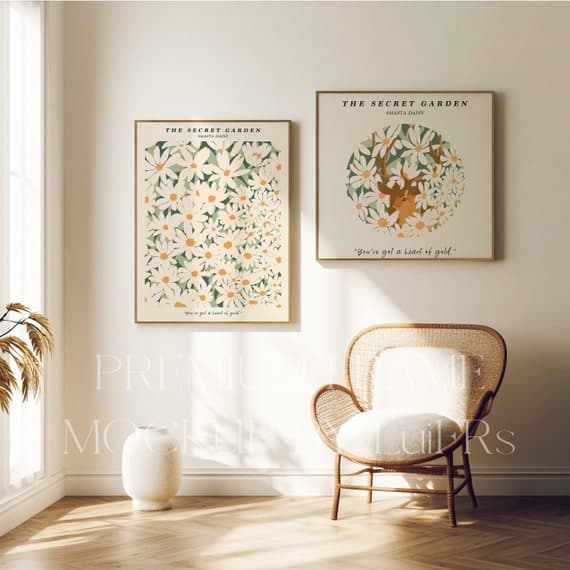
Etsy allows up to ten images per listing, and using that space strategically matters both for conversions and for the overall quality impression your shop makes. A single mockup image leaves questions unanswered. A thoughtful sequence of images, starting with a strong styled mockup as the thumbnail, then showing detail shots, size comparisons, room settings, and framing options, tells a complete visual story.
Shoppers who spend more time looking through your images are more engaged, and engagement time is another behavioral signal the algorithm picks up on. A listing that keeps shoppers scrolling through images is a listing that earns better placement over time.
Takeaway: Think of your image set as a conversation with the shopper that answers their most common doubts before they have to ask. The more visually complete your listing is, the higher your conversion rate will be, and the more the algorithm will reward you for it.
The Connection Between Image Quality and Shop Reputation
Etsy's algorithm doesn't evaluate your listings in isolation. It also looks at your shop-level signals, including your overall sales history, review scores, and how consistently your listings perform. This means your image quality has a compounding effect: better images lead to better individual listing performance, which builds a stronger shop reputation, which lifts all your listings across the board.
Trust, Reviews, and the Visual First Impression
Shoppers who are visually impressed before buying are more likely to feel satisfied after buying. When a customer's downloaded print looks as good as the mockup suggested it would, that matches expectations. Matched expectations lead to positive reviews.
Conversely, when a listing uses vague or misleading images and the customer receives something that feels different from what they imagined, disappointment follows. Negative reviews, disputes, and refund requests all damage your shop reputation score, which feeds back into search placement negatively.
High-quality, accurate mockups set the right expectations and attract buyers who already know what they're getting. That's a healthier buyer relationship from the start.
Star Seller Status and Search Ranking
Etsy's Star Seller program rewards shops that maintain high message response rates, on-time shipping, and five-star reviews. Achieving Star Seller status does boost your search visibility, and your image quality contributes to the review piece of that equation in the indirect but real way described above.
Shops that invest in professional presentation tend to attract more serious buyers, earn better reviews, and maintain higher shop health scores. The algorithm sees a healthy, consistently well-reviewed shop as a trustworthy place to send shoppers, so it ranks those shops' listings higher.
Takeaway: View image quality as a long-term investment in your shop's reputation, not just a single listing tactic. Better images today build the review history and shop health scores that compound into better rankings for every listing you publish in the future.
What "High-Quality" Actually Means for Mockup Images
It's easy to say your images need to be "high quality" but that phrase can mean a lot of things. For Etsy's purposes, and specifically for digital print and wall art sellers, there are a few concrete qualities that separate images that convert from images that don't.
Resolution, Composition, and Lighting
Your mockup images need to look crisp at thumbnail size and at full view. Blurry images, low resolution exports, or images that look obviously pixelated when zoomed in will destroy buyer confidence immediately. Aim for mockups that render your artwork sharply with realistic lighting that matches how the product would actually look in a physical setting.
Composition matters too. A mockup image that's cluttered, poorly cropped, or places the product in an awkward corner of the frame will underperform a clean, well-composed image where the product is the clear focal point. Simple, styled backgrounds tend to outperform busy ones because they let the art breathe and remain the hero of the image.
Consistency and Brand Cohesion Across Your Shop
When a shopper visits your Etsy shop page rather than finding you directly through search, they see a gallery of all your listings at once. Shops where every listing uses a consistent mockup style look polished and professional. Shops with a hodgepodge of mismatched images, some flat, some mockups, some with watermarks, some without, look disorganized.
Consistency signals intentionality. It tells the shopper that a real business is behind this shop, not someone just uploading art files and hoping for the best. That impression influences whether they browse further, favorite your shop, and return to buy again. All of those behaviors feed positive signals back to the algorithm.
Creating consistent, high-quality mockups at scale used to be the hard part for sellers without design experience or expensive software subscriptions. Tools like Mockupanda exist specifically to solve that problem, letting you generate bulk mockups quickly with professional results that work for wall art and digital print sellers specifically. The faster you can produce consistent, polished images, the more listings you can optimize and the faster you build that compounding advantage.

Takeaway: Define "high quality" concretely for your shop: sharp resolution, clean composition, realistic styling, and consistency across all listings. These aren't aesthetic preferences, they're functional requirements for earning the clicks and conversions that the algorithm rewards.
Practical Steps to Start Improving Your Listings Today
Understanding the theory is useful. Knowing what to actually do about it is better. Here's a practical path forward if you want to start using image quality as a real SEO lever on Etsy.
Audit Your Existing Listings by Thumbnail Performance
Start by looking at your Etsy shop stats. Specifically, look at which listings are getting impressions but low visits. This is the clearest indicator of a CTR problem, meaning the listing is showing up in search but shoppers aren't clicking. These listings are your highest priority for image updates because there's existing search visibility to capitalize on.
For each of those underperforming listings, ask yourself whether the thumbnail image is as strong as your best-performing listing's thumbnail. If not, that's your starting point. Swap in a styled, well-composed mockup and give it four to six weeks to gather new performance data before judging the result.
Build a Repeatable Mockup Workflow
The sellers who consistently maintain great images across large catalogs are the ones who've built a system. Rather than creating mockups one by one in Photoshop or Canva, find a workflow that lets you produce professional results quickly.
Bulk mockup generation tools can process multiple designs at once, applying them to the same set of curated mockup templates. This means you can update or expand your image sets without spending hours on each listing. A fast workflow removes the friction that causes sellers to procrastinate on image updates, which means your listings stay current and competitive instead of stagnating with outdated visuals.
For print-on-demand and digital print sellers specifically, the goal is to have at least three strong images per listing: one styled room mockup for the thumbnail, one detail or close-up shot, and one that shows scale or framing options. This baseline covers the main shopper questions and gives the algorithm multiple engagement points to measure.
Takeaway: Combine a listing audit with a repeatable production workflow. Identify your lowest-CTR listings first, update their images with quality mockups, track the results, and build a system that lets you maintain high image quality across your entire catalog without burning hours every time you add a new product.
Bringing It Together
Etsy's search algorithm is smarter than most sellers give it credit for. It doesn't just match keywords to queries. It watches what shoppers do, and it rewards listings that shoppers respond to positively. Your mockup images are at the center of almost every behavioral signal that matters: click-through rate, time on page, conversion rate, and even the downstream review scores that build your shop's reputation.
This means that investing in high-quality mockups isn't just a visual upgrade. It's a direct SEO strategy. Every listing you improve with a better image is a listing that has a stronger chance of earning clicks, conversions, and positive reviews, all of which feed a virtuous cycle of better search placement.
The good news is that you don't need to be a designer, and you don't need an expensive Adobe subscription to do this well. You need a consistent system, a clear visual standard, and the right tools to execute at the speed a growing Etsy shop demands. Start with your weakest listings, build a repeatable process, and watch the behavioral signals shift in your favor.
Keep reading
How to Use Your Mockup Generator to Create Instagram Carousel Posts That Drive Traffic to Your Etsy Shop